Info Filled Icon
Brenda K.B. Anderson

Golf Club Covers

Brenda K.B. Anderson
Duration:   1  hrs 9  mins

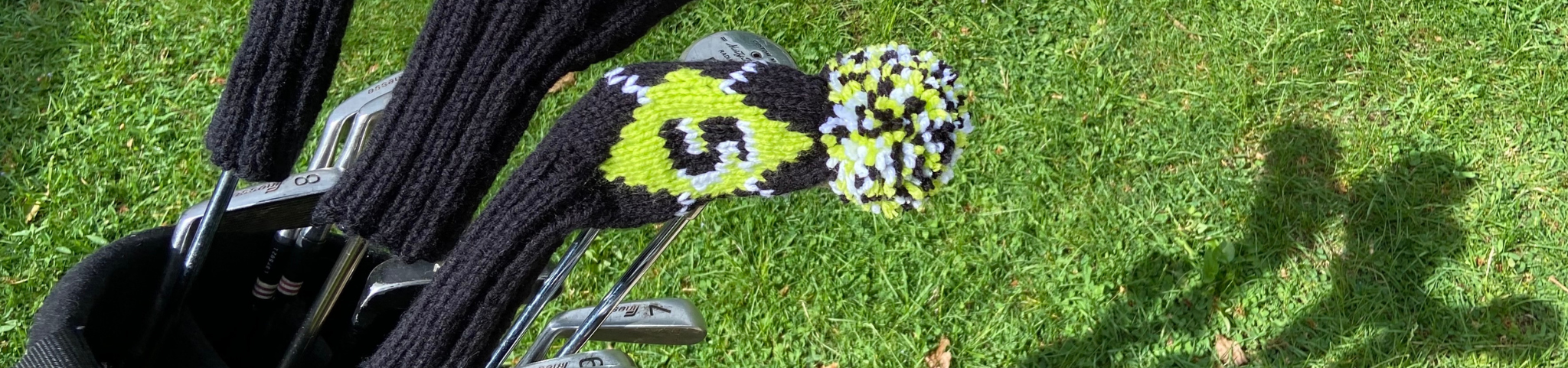
Knit a set of stylish golf club covers to protect your clubs, add a personal touch, and show off your flair for the game. You'll use the intarsia technique to create a simple argyle design, and duplicate stitch to label each cozy with letters or numbers for easy identification. With three different sizes to make and plenty of options for customization, these covers are a fun and practical project—perfect for Father’s Day or for anyone who wants to keep their golf clubs protected in style. Click here to download the free pattern.

Download the free pattern

Share tips, start a discussion or ask other students a question. If you have a question for an expert, please click here.

Make a comment:
characters remaining

No Responses to “Golf Club Covers”

No Comments

Hey everybody, welcome to our live event. My name's Brenda Kaby Anderson, and today I'm going to be doing a knitting project with you guys, the knitted Golf Club covers. So there is a free download. You can find the link to that in the description if you want to follow along or if you want to make these. Um, I do have a whole bunch of charts and things in here which you'll need if you, um, are going to be personalizing your.

Golf Club covers um so this is a live event. I'm glad that you guys are here if you guys have any questions about anything I'm working on as we're working through the the project or if you just have any advice for other people or for me, um, definitely put that in the comments. I love to hear from you guys, um, yeah, so today, uh, this is something that's pretty outside. My wheelhouse, since I am, I have to admit it's like confession time. I'm not actually a golfer.

Um there is golfing that happened in my family for quite a while. My grandmother was a a very avid golfer. She really loved golf, um, but I am just not very coordinated and I didn't give it enough, uh, of a shot, so I am not a golfer, but I do have friends and family that are golfers, so. Um, this is something that, uh, it was kind of an exciting project. Uh, this was something that somebody actually had suggested.

I love it when you guys suggest things, by the way. If you want to put anything in the comments, um, for future projects, if you're interested in making something or learning a certain technique, I'd love to hear from you guys. About that, um, but this did come from a suggestion and I love it when people suggest things to me because it makes me think outside of my normal my normal world of the things that I come up with and um I just, I enjoy that. So, um, definitely, you know, if you guys have suggestions, let me know. OK, so these golf club club covers here, let me just kind of show you what they look like.

They come in, they've been sized for 3 different sizes, OK? So we have the driver, the fair woods, and then your irons, um, and a putter. Do I sound like I know what I'm talking about? Because I had to research all of that language, you guys. But, um, yeah, because before this I didn't really, I wouldn't have even known the difference between those and obviously there's a huge difference between those things.

But, um, so we have different sizes that are, you know, kind of, um, to accommodate for the different shapes, um, of your golf clubs. So. This obviously is the largest one, the middle one, this is the one that I'm going to be working up in my samples today. So this is a fair woods or hybrid, and then the smaller one here for the irons, but they're all constructed in exactly the same way. They just have slightly, you know, different stitch counts to account for the the size differences.

Or whatever. And so I'll kind of be talking through that as we're working our way through. I'm also going to be making this in gray because I, black, even though I really wanted these to be black with that great slime green color, um, I know you guys can't see black very well, so, uh, I, I, uh, I'm switching over to the gray. So the rest of it will be the same. All right, so the way that these are constructed, just to kind of like tell you where we're headed, we're gonna start by working in the round and we're going to work the cuff.

That's what I call this ribbed section here. We're going to work that um on double point needles or you could use, you know, magic loop, you could use, you know, two circulators, however, whatever your method is for working in the round, you could even, um. Work this flat if you prefer. I just didn't want to sew that whole part up, um, so I'm working that part on double point needles and then we're, when we get to this part here, this is created actually flat because, um, first of all, we're working in an Aaria to put the green diamond in there. So the green part, the diamond shape, that's the only part that we're gonna add, um, using the Antaria technique.

And then we're gonna go in later and use duplicate stitch to put the numbers and the personalization on it. So, um, You know, there's lots of different ways you could do this. Maybe you prefer to just do the whole thing as you could even do stranded if you wanted to, but there's a large section across the back where it's just black, but you could add something in there if you wanted to, um, you, you can definitely, you know, change this up to a different, um different method. Instead of working, but, um, for me, this seemed like it was the easiest, the most straightforward, um, plus, you know, if you're not, if you're not, um, are you familiar with those two ways of adding colors to your work, you know, it would make an interesting life, right? So you can learn in Taria and also the duplicate stitch, uh, to add that personalization on there.

So speaking of the duplicate stitch, I did mention this earlier. I do have a bunch of charts in here in your download, so so that you can personalize it with whatever numbers, you know, makes sense for your golf club set. And also I did add some letters in here D for driver, H for hybrid, and F for Fair Woods. So, um, I feel like I'm gonna say fair aisle by accident just because I'm talking about knitting. Anyway, so that's what that's all about.

These are just, um, ideas for you to customize. You certainly don't need to add that to it if you don't feel like you need the the numbers or, um, the personalization, um, but I, if it were me, I would like to know what they are before, you know, so that way I can just see it at a glance, um, and grab the, the club that I need. OK, so. Um, as far as amounts, that's gonna depend on how many you're making for your set, but I just bought 3 skeins of yarn, and I think that that would cover most, the majority of the clubs in the set that I'm doing this for. Um, but, you know, that, that is just gonna kind of depend on, on how many you're making them for and also like the sizes that you have and all that sort of stuff.

Um, but I do have yarn amounts in your materials or in within the materials section. It's about, uh, 210 yards in the main color which is black for a full, like all the, the all three sizes put together, if that makes sense. All right. So, um, I'm using a 6, size 6 double point needles, so that's like a 4 millimeter, let's see. Where did I put that?

OK. Um, yeah, 4, 4.25 millimeter or 4 millimeter needles, um, but you can use whatever you need to in order to get the same gauge that I have listed in, in my pattern. Because these are, you know, I wanted this to be like a rugged project. I, you know, because we're putting it on pieces of metal and they're gonna be, you know, you're gonna be carrying it around. I wanted it to be very sturdy.

I didn't want anyone to have to worry about any, you know, holes peeking through or stuff shredding, so I knitted at a pretty tight gauge. So just, you know, just FYI in case you're trying to figure out what needles to start with to check your gauge. OK, so, um, one thing that is important is when you do your cast on, you're gonna want to cast on, um, use a method that is pretty stretchy because you're, especially if you look at this, this has to stretch over something that's this large, so you're you're not gonna want the cast on edge to be restricting the the stretch in that ribbed part there. So I am using the German twisted cast on method, um, because I know that's nice and stretchy. Um, and I'll leave about a little less than a yard or so of a tail.

I'm gonna make myself a little slipknot. This is how I start. Um, I know some people just twist it, that's fine. however you want to do it, however you want to cast on, is totally fine. I'm just going to show you this in case you've never done this one before.

So I'm gonna hold this in that slingshot position, and I'm going to be casting on 28 stitches because I'm doing the middle size. So I'm gonna go under here. And down around the top over to the other one. I'm going to grab that and pull it through the little window and drop it off my thumb and tighten it up. So if you need a little extra help, there are videos on the the knitting circle website on how to do the German twisted cast on.

There's probably a whole bunch of other stretchy cast on as well. So go ahead and look those up if you need a little refresher. OK, so we've got 4. 5 6. 7 And I like to cast on all onto one needle when it fits, 8 and then divide it later.

9. 10 11 12 14 15 16. 1718. 19. 20 8 more to go here.

12. 3 4 5 6. And 8. So that's, there's our 28 stitches. Now, we're gonna divide that to start working.

In the round So I'm gonna put, it doesn't really matter right now how you divide it up. I'm just gonna put the 1st 10 stitches on this needle. And then I'm going to add just one more and I'll show you why in a minute. So, um, however many stitches you want on the first needle, and then add just one extra. So that I like to make the first needle be an odd number.

Let's see, 1234567, and the And the 2nd needle will be an even number, and the 3rd needle is, um, now an odd number, but we're gonna cast on one more stitch here. So we're casting on the the amount that we needed, plus we're adding just one more, and that's just because of how I like to do my join. So then when you lay this down if you've never worked in the round before you want to locate all of those little little little twists that are along your needle and put them to the inside of a circle like you can make a little triangle like this and have them facing towards the inside and then take your tail, just put it down in front of you. The other tail should be behind if that makes sense. And now we're going to pick this up.

Into this little triangle shape here. And we're gonna, um, so in my right hand I've got the needle with the two tails on it. This is the yarn tail right in front. The longer yarn tail that's connected to the ball is behind it. Now I'm going to take my right hand needle and I'm just going to go over here to my left hand needle and I'm going to slip a stitch pearl wise.

So I just insert my needle through here and I'm going to slip it over onto the needle with um with the yarn ends and then I'm going to take my left hand needle and I'm going to bring the second stitch. Over the one we just slipped like that. And drop it off. And then I'm gonna pull on my yarn tails just a little to snug them up, and that's gonna make this a nice joint, and we're ready to start working in the round. There's lots of different ways to do that.

Um, you can also just reverse which needle is where and then just, um, sorry. Let's see, if you, you have your beginning yarn tails on the right, and then you can just start knitting all the way around. You'll have like a little bit of a jog there, but that doesn't really matter. I mean, to me, it doesn't really matter. Usually I just use the beginning yarn tail to just kind of fix that little jog when I weave in my end later, so.

OK, so now that we're all joined up, ready to go, we're gonna start knitting, and we're gonna do 2 knits, 2 pearls, all the way around. So we've got 2 knits, 2 pearls. And then we're gonna repeat that. 2 nets. Two pearls.

To knits And 2 pearls. 2 nets, 2 pearls. And um if you are newer to working on double point needles, this is the hardest part I feel like the first round or two once you kind of get going, it gets so much easier so hang in there if you're doing this for the first time, um, it can be a little bit awkward. And trying out different needle types like different, um, made out of different materials can also help. If you find a stickier needle, your loops will slide around a little bit less, like when you're first learning, I always recommend that people use bamboo or wood or like a sort of textured plastic.

All right, where's that your tail? Here we go. OK. So we've done our first round. Of the ribbing, and we're gonna continue.

I'll do one more round here. So we're just going to keep on working in this 2x2 rib pattern for 30 rounds, or however long you want that part of your, of your cover to be. So once you get the 2nd round in there, then you are gonna start, um, to be able to see the pattern, the rib pattern. So it's gonna remind you whether you're doing a knit or a prowl. Hm Oh, we've got a hello Kiran from India.

Hi, welcome. Thanks for popping in and saying hello. I'm still just working in that 2x2 rib pattern here. I'm working on my last needle for the round here. I usually don't end up using a stitch marker to keep track of the beginning of my rounds because I have this tail here to remind me of where it is, but if that's something that that um you know, you'd like to have a reminder closer up to your needles, you can always use a removable stitch marker or locking stitch marker, and just lock it on that first.

That first stitch of your round oops. All right. So, you would just continue working in the round and make sure, you know, if you're newer at this, make sure when you work that first stitch of a new needle, you really pull on your yarn tail right as you're making it, as you're dropping it. Um, or as you're, as you're forming that stitch, make sure you're pulling on that yarn tail because otherwise you're going to get spaces between wherever your needles, you know, wherever you switch from one needle to the next, you'll get little ladders is what we call them. So, um, that just can be avoided by really pulling hard like when I would do the next stitch because it's the first stitch on the, on the new needle.

I'm pulling this pretty hard here with my finger and as I'm dropping it off, I'm kind of tightening it up and kind of bringing it up next to that needle. So that will help you kind of stay on track. So you're gonna keep doing that until you worked about 30 rounds, excuse me. About 30 rounds and, um, or your ribbing is as long as you want it to be. So this is not 30 rounds, this is probably only half that.

So just imagine this is a little bit longer, and then I'm gonna show you the next step on here. Um, you can certainly make it longer if you want to, uh, just, you know, you can just knit until it's a certain length. You can just measure it and keep track of that for your other clubs if you want them to be all the same. It doesn't really, doesn't doesn't really matter. OK, so now we're gonna be working on row number 31 or round number 31.

And so this is where we start doing some increases. Let's see, I'm gonna bring this in here. So we've just done the ribbing up to round number 30. So on round number 31, we are depending on the size. So if you were doing the first size, you would knit 5.

If you're doing the middle size like I am, you're going to knit 6. If you're doing the largest size, you would knit 3, and then you're going to do an increase where you knit in the front and the back of the loop, and then you're going to repeat that 3 more times. So I'm going to be knitting 6. So one To 3 And then we're going to knit in the front and knit in the back. So, we're going to knit the front just like normal, but we're going to leave the loop there, and then we're going to put the tip of our needle in, sliding it in from right to left here into the back.

So we're going to knit the back loop as well. Just like that. And now we're going to repeat that. So net one. 2 3 456, and then we're gonna knit front back.

So we're gonna knit in the front and knit in the back. And we're gonna repeat that one. In the front in the back. For 5 6 Knitting in the front and knitting in the back. All right, so we've done our increases, so that would be a differing amount just depending on what size, uh, cover you're making.

And now at this point we're going to redistribute our stitches because I want the stitches that are going to be worked across for that that um diamond. I want those to be on the middle uh needle so that we don't have to keep track of all the other stitches really. So we're gonna have for this size we're gonna do 9 stitches on the first needle and then we're gonna do. Uh, let's see right here. 9 stitches on the first needle, and all of them should have 14 stitches across the middle needle, no matter what size you're working on.

And then I'm gonna do 9 stitches on the third needle. And because I am going to be, if I was making the smallest smallest size, I would just kind of slide those stitches into place. I would, you know, count up 1234567, and then I would move them over like this. Let's see, 12345678, and 9. And then I would just continue to, you know, redistribute like that.

Oops, that was not my first needle. There we go. Here's my, here's my first needle right here. OK, there we go. Um, so, I would just go ahead and redistribute like that, but because I'm making one of the larger sizes on my next round, I'm going to be knitting one round for my size, or if you're knitting the largest size for the driver, um, you'd be knitting 4 rounds.

So on this round right here where you're just knitting every stitch, that's where you can also redistribute your stitches so you can count them as you knit them if you want. Um, that's how I usually like to do it because it feels like it's somehow more efficient. I don't know if it is. So, um, I'm going to do 9 on the first needle, 14 on the 2nd, 9 on the 3rd. So we've got 8 And 9 on the 1st.

And then we're gonna do 14 on this needle here. So one But we still need to have a total of 14, so 1011, 12. 13 and 14, so there's my middle needle. And then we'll do 9 here. We'll just double check and make sure we have the right amount of stitches.

So, 8 And 9. Here we go. OK. So now we have finished, finished a ribbing. We worked that one round here.

If you were working the smallest cover, you just wouldn't work any rounds, you'd just redistribute your stitches. And then we're gonna start working in stocking that. So the reason that I'm working in stockingett here is because Intaria is easiest to work when you work it back and forth and turn rows. You can work it in the round. Um, but that just required too much.

I, I was trying to keep this a little bit more simple. So in case you hadn't worked in Taria before, this is just gonna make it so much easier. So at this point we're gonna work back and forth and turn rows, um, so you don't have to do anything special here. It's just after we work the first row, then we're going to turn our work and then work with the wrong side facing after that. Um, oh, I have, we have a question.

Are you self-taught? I was taught by my mom to knit, um, when I was in my early twenties. Um, I learned how to crochet when I was a little kid. She taught me that. She also taught me how to sew.

She taught me lots and lots of things, um, but I have not like studied professionally with anybody or anything like that, but I did, I learned from my mom, um, and yeah, I just learned from lots of other knitters too, and it's been really awesome being able to pick up tips and learn things from people just. You know, watching videos and stuff like that. It's just, you know, we didn't have that when I was learning how to knit, it was basically like my mom sitting right next to me and helping me helping me, putting her hands on my hands and saying, no, do it like this. Um, yeah. OK.

So, let's see. Now we're gonna be working on the stocking up section, and this is where we started doing it in Tarja. Let's see here. OK, so I have a chart here. This is going to show us, um, what our piece is going to be looking like.

This is the diamond shape that we're making. The gray is the black in my piece or the gray in the sample here. So this is just representing those 14 stitches across that middle needle right here. So we can just knit across the first needle, then when we get to the second needle, that middle needle, we're gonna be following this chart, um, for the color work. So we're gonna start by just knitting across.

But first needle. Just knit all your stitches. And now we're on the 2nd needle, and I I can see just by looking at my chart we're going to start, so when you are working from a chart and knitting, you're going to start at the bottom and work your way up. OK? So I'm looking at these stitches as they come because I'm knitting from right to left, so I'm going to start here 123456 in the gray, and then the next two will be in green, and then the rest of them will be in gray, OK?

So I know I can go ahead and knit 6 stitches in the same color as I've been using. So one, 2345, and And then we're gonna bring in our green. And when, whenever I join yarn, I mean, most of the time when I'm joining yarn, especially for Intaria, I just let that yarn hang out in the front. So this is where, this is where my last stitch was right there. So, um, right in front of my needle on the left, I'm just gonna drop this right right on through there.

OK, so I'm still knitting my way across. I'm gonna just stop hanging on to the, the old color. I'm gonna hang on to this new color, and remember, it's not like, it's not actually anchored to anything. It's just sitting there between my needles, and I'm going to knit that with that green yarn. It can feel a little awkward at first cause there's nothing, um, holding it there.

You just had to have to make your little loop and don't worry if it's misshapen or weird looking, um, cause we can kind of tug on the yarn and, and fix it as we go. So we're gonna do two green stitches like that. And then in Intaria, especially, you know, when you're, when you only have these two stitches, you might think, oh, I'll just, I'll just grab that yarn and use that for the rest of it. But in in Tarsia you keep a separate ball of yarn for each section of color. So if you take a look at this, that means you're going to have a ball of yarn for your gray over here, a ball of yarn for the green, and then a separate ball of yarn over here because you're not carrying the yarn from here through your design to the other side.

So one thing about that that I really like, I mean. You know, when you're working in color work you, you can decide if you want to go by the rules or not. Sometimes when I'm working in Antaria, I do actually end up carrying my um color for little tiny sections here or there if it just makes more sense, but, um, you don't want it to show through. You don't also don't want it to constrict your work, and this is something where I didn't want there to be a bunch of floats on the back and that sort of thing. So that's part of the reason that I chose Intaria.

It's nice and stretchy, um. You know, you're not gonna have those floats restricting your restricting the fabric or keeping it from stretching. So, um, we're gonna grab another ball of the gray yarn. To start with, so I would you make like, um, you can actually do this before you start, or if you've been working on it and you get to this point you're like, oh, I forgot I don't have another ball of gray yarn, you can always just spool off a bunch of the yarn that you already, you know, that it's attached to. You can just.

You know, put it in a pile and then roll it up. Um, I do that all the time when I'm working in Antaria, whether it's in knitting or crocheting or whatever I'm doing. I don't often like look ahead and figure out how many balls of yarn I need. I will stop and be like, oh, I need another ball of yarn, but this is connected to that yarn. Well, how much do I really need for this?

And I just sort of estimate by pulling it off, ball it up, and then the skein is free. So, um, I feel like in Antaria we're always taught, well, you should look ahead and make the balls of yarn before you start, but it is just not something that I usually end up remembering to do, so I just do it in my own method where I just make them as I go. All right. So, I'm, I'm adding a second ball of the gray in. This is a new ball of yarn, and I'm gonna add it in the same way.

So, I'm just gonna lay it across in between those two needles like this. And I've dropped that green yarn. And I'm gonna hang on to the new gray yarn that I have right here, just hanging on to it, and I'm gonna go ahead and just make a knit stitch grabbing that gray yarn. And then continue my way across. And I know it might seem weird at first like that I just have these yarn tails hanging off the front of my work, but those are gonna get woven in later.

We can use a needle to push those through to the back. I prefer them. I really prefer them to be on the outside on the front so I can see them and they're not getting tangled up and I'm not accidentally grabbing one of these when I come back around and I'm looking for a yarn tail to knit with so they stay a little bit more out of trouble if they're on the outside. All right. And now I'm, I'm on my last needle and I'm just knitting straight across.

And here I am back at the beginning of my round, but we're working in and stacking that stitch, meaning we're knitting the front side of our work and pearling the wrong side of her work. So um we're knitting back and forth and turned rows. I know it doesn't look like it because I still have this circle here, but um we have ended here and I'm going to just turn my work like this so I can see the wrong side of my work and I'm just going to be knitting in this direction and that is how basically how you switch from. Going in the round to working flat, even though this doesn't look flat, I know. So, because we have the pearl side showing, we're gonna be pearling all the way across this needle here.

All right, so we made it across the first one. Here we are on the middle needle. Remember, the middle needle is where we're doing that color work, and you can, I mean, you're going to be reminded because you can see it right here. So we're going to look at our chart, and we can see that row number 2 has exactly the same color pattern as the previous row. So if it's a gray stitch, you're going to pearl pearl a gray stitch there.

If it's green, you're going to pearl a green stitch. So we're gonna Be working across. There we go. We're gonna be working across this middle row here, or this middle needle here. So I'm just doing pearls.

Across to where the green is. And here we go. There's our last gray stitch. And now, here is what makes Etaria actually work and not just become a bunch of separate knitted pieces. So, when you're switching from one color to the next, Um, they always say in the directions to pick up the color from below, but that has never really made sense to me unless I'm already doing it and I'm already doing it right, then I can look at it and be like, oh yeah, I am, I am picking it up from below.

But for some reason when I would read those directions and see and it didn't mean anything to me. I didn't understand how you're picking it up from below. There's just these strands coming off your work. I didn't really get it. So I like to explain it a different way.

Um, after we are, we have just finished the last stitch of a color, and we're going to switch to the next one. We take the old yarn and we're just going to lay it down basically parallel right on top of that needle where we're going to be knitting, OK? So it's going in that direction and the color we're switching to has to be underneath it. OK. OK, so if we had just finished and this color was somewhere else, like here, we couldn't do this.

And then just start pick that one up and start using it because that's actually above see the below above thing it only it does make sense and it is of course correct but for some reason it doesn't remind me um like how to arrange my yarns. So you know you just have to make sure. That the next color you're using is on the first level here, right? So it's right on the back of your work or, um, you know, it's, it's coming straight down, and then you're going to take the color you've already used and you're going to lay it over to the side like that, like just on top of this color. Then we're going to grab this color and start using it.

And so we're trapping that color in there. We're just locking it in. So I'm doing pearls, remember, because we're we're working across the wrong side. And if this looks messy and weird and like there's a hole there, it's, it's OK because we that's pretty common, especially when you're starting out you kind of have to just rearrange and pull on your yarns in order to make them behave. You can always do that on the next row too.

Um, and then here's my next pearl. And see that loop's getting nice and stretched out because nothing's really anchored here. You have to just sort of always be, you know, just kind of pulling on it until you get a little further into your project. OK, so now we've done our two green stitches and we're going to switch back to the gray. So we have to make sure, first of all, that we're going to pick up the correct gray.

So this gray is the one we just used, and that's staying over here on this side. Then this gray is, is for this section here. So that's the one we want. So we're gonna take the color we just used, lay it down across this needle like that. Then we're going to pick up The gray that we want and start knitting with that, well, pearling with that, I should say.

Oops, I split my stitch a little. Here we go. So we're just pearling with that gray, and I know it looks very loopy. As soon as I get a couple more stitches done here on this needle, I'm gonna go back and I'm gonna tug on those yarns. Till they look like they're in the right shape.

Here we go. OK, so this looks messy here, but that's OK. We can straighten it out a little. That's a big loop. That's because this is just sort of needs to be pulled on just a little bit.

You don't want to pull it so tight that you're making the stitch go away, but, um, you know, you just don't want it to be all loopy and, and uh have a bunch of holes between things. All right, so we're just going to continue with that same gray color, and we're gonna finish up that row, making the pearls. Oh, Juel is wondering what techniques do I specialize in. Um, that is a good question. I, I particularly like cables.

Um, I also really like Etaria, but I don't do it as often as I do cables, and, but I guess if I had to pick a specialty, I would say making toys is my specialty. I come my background, so, um, I. Uh, I come from a sewing background actually. That was the first thing. Well, I learned how to crochet when I was really little, like 6, and then my mom taught me how to sew when I was about that age as well, and that really took off and I ended up having a sewing career for more than 20 years making costumes.

I made like full body character costumes, so like, you know, like picture, um. I worked on like Sesame Street Live costumes, uh, Paw Patrol costumes, trolls, like the touring trolls show costumes, My Little Pony, all kinds of, you know, those kind of full body character costumes where you don't see the person in there. Well, usually you don't, um. So I did that for many, many years and so while I was doing that and maybe just it's just the person that I am, I just really enjoy making cute little Character things and so I really really love bringing that out with my knitting and crocheting and creating toys um because it makes me happy. But I do love all sorts of things.

I love vintage stuff. I love cables. I love lace. I, I, um, it's not just, you know, I, I dabble in all of the all of the facts. I really like learning new techniques, um, and there the good thing is, is you will never learn everything.

There's so much out there you can always learn more stuff. OK, so I've already started working on the next row. I don't know if you guys saw that. I turned my work and now I'm facing the right side of my work and I'm already working my knits all the way across to. My color work here.

I'll show you that one more time. So, I mean, not right now, but you'll see it again before, before we're done with this section. Um OK. Here we are And now we are at that section with the 14 stitches. That's our color work section.

So we're going to look at our chart, and we've got 12345, and you can see that this is just, I always like to look and make sure I know how many stitches it is different from the row before. So we're working in row 3. This one, this stitch is gonna start right before the green where it already is right now, if that makes sense. So we're just going to knit our way across till there's one stitch left before we get to the green. Here we are.

So there's one gray stitch, and, and we are going to be switching colors. So we're going to take the gray, we're gonna lay it parallel to our needle, OK? So we're always doing this on the wrong side of our work before the wrong side was facing us, so this was on the side toward us, but it's always going to be on the wrong side of our work. So back here, OK? When we're looking at the right side, it'll be on the opposite side of the needle.

And then we are going to bring up the green yarn from underneath. So see how they, they're gonna cross over each other. Like that. And then we're gonna knit across. And we're going to knit this stitch right here, and we're going to switch to the gray.

So we're going to lay the green down parallel to that needle, and then we're going to pick up the gray, make sure you're picking up the second gray, you know, not the one we just were using for working this section here. OK, so now you can see our color work is starting to take shape. Um, and we're just gonna keep using those same techniques, working back and forth, so we'll work all the way over to here. And you can see it's already, it's split here because we're working in turned rows. OK?

So that's gonna continue. We're gonna just work the next 23, well, a total of 23 rows here, um, following that, that color, uh, the color changes, and it's going to look like this. Here we are. So that's what your piece will look like after you've worked many more rows. This is what the back of it looks like.

OK? So there's, you know, Now it's in two separate sections and at this point, you know, like even partway through here if you're like, oh, these double point needles are driving me crazy, you don't, there's no reason you have to work on double points at this point. You could change to a circular, you could change even to straight needles if you wanted to partway up. It just has to be enough so that this can be straight, basically that this can kind of open up and and be straight across. So, um, that, you know, that's definitely an option if it's, if it's kind of driving you crazy.

So then at this point, so we've just finished up row number 23. So row number 24, I believe we're, let's see, pearling, let's see. Yeah, we're gonna pearl one row. Georgia says I'm trying so hard right now to crochet but I can't do it yet. Well, I don't know if you've already found the creative crochet corner.

That's usually where I'm living. I, I spend a lot of time over there doing these live tutorials. I have made myself quite a tangle here, you guys, um. And but there's lots and lots of resources over there and I did, um, a live event where I was teaching you the very fundamental like single crochet stitch very slowly, um, but if you want to check out, there's lots of free stuff over there and I do lots of lots of tutorials for crocheting. OK.

So, we just finished up working the, the last row in. In the in Taria. And now we're going to be doing just one pearl row here, and then we're going to start our decreases. So I'm gonna go ahead and work that pearl row all the way across. Oh, did I drop a stitch?

Hold on. Oh, I see what happened. OK. Somehow I dropped a stitch, maybe when I put my. Yarn away 12.

Oh, no, I know what I did. OK. We're gonna have to just undo these couple of stitches here. Yeah. OK.

And do a couple more, and then we'll finish up, we'll fix this. There we go. There was our problem. I somehow must have skipped a stitch or dropped a stitch somewhere. All right, there we go.

Now we're gonna go ahead, turn our work. As if we have just finished up row number 23 of that chart, the Intaria, and we're going to be doing pearl stitches all the way across. So we're going to do that, and then we will start our decreases, and I'll show you just a little example of each of the decreases, and then we'll move on to the um duplicate stitch. All right. Oh, we've got some more comments here.

Oh yeah, we got a link in there for learning how to crochet. Excellent and Georgia says they're getting better at it though. Awesome with crochet, yeah. But I've only, uh, I've only now conquered knitting excellent. There are days when I feel like I haven't conquered either or really anything, but it's always fun to learn, right?

Even if you, you know, I feel like this, it's one of those things where the more you, the, the more you learn, the less you feel like you know sometimes. But yeah, there is a certain amount, you know, when you're learning, knitting or crocheting at the very beginning, it's the I feel like it's the hardest when you're trying to get that muscle memory. Everything just seems like it takes so much effort just to do like a little, you know, make some even stitches or something like that but once you get that. Then I feel like everything else, yes, you'll have frustrating times sometimes, but everything else is so much easier than that. The beginning is always the hardest, I feel like.

That's probably true of a lot of things though. All right. There we go. OK, so now we're going to start those decreases. So in the decrease section in our pattern, it says to knit 2, then knit 2 together, and then slip, slip, knit.

So we're going to do that. Oh, and actually at this point, of course, you can cut off your contrast color and cut off whatever ball of yarn you're not using of the gray. So that will kind of free things up here. I feel like I'm tethered to my whole table because I'm making a big um I kind of a twisted mess over here with all my samples. But Now we're free.

OK, so we're gonna knit 2 and then do a knit 2 together, and then a slip, slip, knit. OK, so we're knitting 2, so 12. And then you'll knit, you'll knit a different amount depending like if you're making the driver, the largest one, you would knit 4 here instead. But we're knitting 2 and then we're going to knit 2 together. So knitting 2 together, that just means you're, you're making a regular knit stitch except you're just coming over here to the second one and going through both of them at the same time like that.

So you're going from left to right and knitting them both as though they were one stitch. And then the slip slip knit, so we're gonna slip, uh, slip from the left needle to the right needle. So I'm placing my needle here like I was gonna knit it. And doing the second stitch the same way, then I'm going to knit them together through the back loop like this. OK.

So there's our slip, slip, knit. And then we're going to knit 4123. And 4, that's just for the size cover we're making. We're knitting 4 here and then we're going to do those decreases again. So we're going to knit 2 together.

So we're just coming over here and knitting those 2 stitches as though they were 1. If you just kind of squish them together, it's kind of like just doing a regular knit stitch and then a slip slip knit. So we're slipping by putting our needle in as though we're going to knit it. So slip, slip. And then we're gonna knit those two together through the back loop like this.

All right. And then we're going to do that whole thing again. So, we're knitting 212. And then we're gonna knit 2 together. Let's see, did I get off somewhere?

Knit 22 together, slip, slip, knit, knit 4. 2 to go. OK, twice. So knit 2. 12.

12, oops, I know 1 too many there. And then we're going to knit 2 together. Slip slip net. 41. 23.

And 4. And then we're going to knit 2 together. Then we're gonna slip slip it. Oh, and I'm supposed to knit too, but somehow, OK, somehow I got off. I think I got off somewhere over here.

Somehow, let's see, let's just. Look at our stitches here. So we've got it to. Knit 2 together, slip, slip, dit. Then knit 41234.

Then knit two together, slip slip, knit. And knit too. Then we knit too. Oh, those were, OK, I know how I know where I messed up, um, because I skipped to a knit too. So we will just unknit this.

So if you're unknitting, you're just gonna be putting your left needle into your stitch and pulling out that yarn there in case you've never done that before. I have done that so many times. It's sad to say, but this is how we learn things, right? So you just put your left needle into your stitch and then pull, pull the right needle out of it. And that, and, and um for things where you have a twisted stitches, like what, what we have here, we're gonna have to untwist those.

Put them back on. And you always want to put them on so that that. The leg on the right is in front. OK, so here is the problem, right? Here.

I was not supposed to knit those two together, I was supposed to knit 2. So knit too And then we knit 2 together. And then we have a slip, slip, knit, slip, slip. And it And then we knit 41. 2 34, knit 2 together.

There we go, and slip slip knit. And then we should only have 2 stitches left, which is what we have, so it's correct this time. Sorry about that, you guys. And we're gonna knit to you at the end. OK?

So just in that one row, we have shown you how to do the both decreases that you're gonna be doing. They should stack on top of each other, um. So as you work through the next few rows of the decreases, um, on the, on row number 2, you're just gonna pearl across, no decreases on row number 3, you're doing basically the same pattern. There's just gonna be fewer stitches, uh, that you're knitting between your decreased stitches, so they'll be stacking. On top of each other.

And then if you look down here in your pattern, um, for the two larger sizes, you're going to do 2 more rows, another row of pearling, another row of decreasing, and then for the driver, you're going to continue to do pearling decreasing, pearling decreasing because that's a just a larger piece. And then after that, you will just cut your yarn. Actually, let me show you where we're at here. So I've done some more of the decreasing here. I think I might have 2 rows left.

Let's see, 2468, 1012, 1416. OK, so I'm right after finishing row number 3 of the decrease section. So I'm gonna do a pearl row and then a decrease row. Oh, I already did my pearl row, looks like. So, this is the last decrease row.

So for me, I'm going to knit 0, so that means I don't do anything there. A lot of people have questions about that because it doesn't really make any sense. It's just a way of being able to keep all of the sizes, um, written within the same line. So I'm not doing anything. Then I'm going to knit two together.

And then I'm going to slip slip, knit. And knit one. Let's see. Where am I? No, slip, slip, net net 0, sorry, net zero again.

And then I'm going to knit 2 together. Just right here. And then slip, slip, knit, slip, slip, knit. And then I'm going to do that whole thing again. So knit 0, so I don't do anything.

Then I'm going to knit 2 together. And then slip slip knit. Again, knitting 0, and then knitting 2 together. And then slip slip knit. Just like that.

OK, so then when you're finished up, um, when you have done all of your rows, you're gonna go ahead and just cut your yarn. Leave yourself a bit of a yarn tail though, so you can do a little sewing later. And then for now, we're going to just thread that onto a yarn needle. And I like to just bring that straight across and go in this side, and I'm running it through the rest of the stitches, like all the stitches that are still live. This is just gonna become the top.

Top of the of the cover. Here we're just closing it up. OK, so there's all of our live stitches. We're just gonna close that and I'm just gonna let this tail hang out here for a while because we're gonna use that later to sew. But before we do that, that's when we're gonna start our Intaria.

Um, and normally I would get rid of all of these yarn tails in here because you don't want that to get in your way as you're doing the intarsia, but in the effort of Being able to show you everything before I run out of time, I'm just gonna kind of tuck them out of the way. Maybe I'll just Yeah, I'll just sort of stitch marker this one up here, so it'll stay out of our way in the back. OK. And then this, um, you may be wondering how, you know, what to do with those yarn tails. You could just poke them right back through to the wrong side and you can weave them in.

OK, see how good that looks. All right. So that one, I'm just gonna tuck that one out of the way. I should have left it in the front really to do the, the, uh. Um, Duplicate stitch, but that's OK.

We're gonna tuck it out of the way. All right. So, basically, you want to clean up the back as much as you can, weave in your ends and all that before you start this, just so that you're not getting, um, your yarns caught. So, and then in order to add any, whatever personalization you want to, I'm going to be working from a chart here. I'm going to do this number 3 here.

So the green is just representing this diamond that's already here. So you, you know, obviously you don't need to stitch the diamond on because it's right there. The reason it's on this chart is just sort of that you can kind of be Uh, you will know where to put the other stitches. So duplicate stitch, if you've never worked duplicate stitch before, it is a very fun way to add some color or design or personalize things. Um, it's very much like doing counted cross stitch or some kind of embroidery on your project, really.

You're just following the anatomy of the the knit stitches when you're adding it on top. So, um, actually I'm going to start with the black. I think I'll start with the black here of the 3. For me, when I do when I do duplicate stitch, I just like to keep it simple and I just like to remember two rules. So my rules are work from the bottom up instead of top down.

You can also work from side to side if you want, but if you're working from the bottom up, that's better than from the top down. It makes your stitches lay flatter. It just has to do with where your yarn is going to cross over on the back of your work as you're taking the next stitch. Um, but if you remember, go from the bottom up. And then when you're going from side to side, you can go either way, from right to left or left to right.

Your needle just has to be pointing in the direction that you're about to work in. So that'll make a little more sense in just a second. Um, I, so I'm looking right here at my chart. I'm going to start here on the bottom where the black is. So I can see there's 4 stitches here, and they're going to start in a little bit from this little jog.

I'm just, you know, looking for a place to start. And if I look here, here is my 3 stitches. There is my 3 stitches right there. I go down to the next one. There's that, and I'm going to go down to the 3rd 1.

There's that, and it's just one up from that. So this is the line where I would start, and I'm starting on the 3rd stitch in from the left, right there. So this right here, this little tiny V, that's where I'm going to be making my first stitch. So I'm going to come out from underneath. And actually sometimes I will do this.

I will just start from the front of my work and stab my way through like this, because then that yarn tail is gonna be a little bit more out of the way, um. There we go. So, there's, there's my first stitch. I'm coming out at the bottom of the V. And I'm just going to let this just hang out here.

So this leg right here and this leg here, that's what I want to be covering up, and I know I'm going to be working from left to right because I'm starting right here and I'm working my way across in that direction on the chart. So I have to have my needle facing the way that I'm going. So I'm going to run my needle through underneath the the two legs of the stitch just above it, OK? So I'm really embroidering down here, but it's going underneath the legs of the stitch above. And then it's going to go back down where I came from.

And then I'm gonna get ready to do the next stitch, which is right next door, just right next to the stitch. So I'm gonna come out. Right here, right there. I was a little messy, I kind of. Uh, had a yarn tail in the way when I was pulling on that, but that's OK.

All right, so there's my very first stitch. And now I'm gonna do the next one right next to it. And remember, my next stitch is going to be this way, so I'm putting my needle through from left to right. And if that's awkward, you can turn your piece like this. And have it be kind of like sideways.

So, there's the first leg. We're gonna go back down right here. And we're gonna come up in the stitch right next to it. Like that. So, let's see, how many do I have?

4 in black. Here we go. There's the 3rd 1. And here is the 4th 1. And then I can go up to the next row here.

So, I'm gonna start over here on this stitch. So, that's just one away. So if I look at this. After I make the stitch, if I was going right next door, it would be here, but I'm gonna go right above it. So that is the next stitch that I want to come up at the base of that stitch.

So, you're always coming up at the base and then going, and then you're doing the two legs, excuse me, the two legs of the stitch. Now, I'm gonna be working in this direction, so I'm gonna hold my needle this way. So I'm gonna go underneath the legs of the stitch above. And go back right down into where we came out, and then the next stitch is right here, just above that one. Right here.

Going right down where I came out of, and I'm gonna come out of the next stitch. OK. So basically, we are just, we're just working back and forth in horizontal rows right here. But let's just say this is not, this would not be following my chart, but let's just say we wanted to go up like in this direction or if there was something there was like a longer like if we were making this section of the one here, um, you could go back and forth all the way up or you can go up and then you can also go up from the bottom here next to it just depends on how you want to do it um but I would not recommend going down because of the way that we're making our stitches it. It just makes it look less tidy.

Um, you can try it and you'll see what I mean, but learn from my mistakes, you guys. Um, I always think about it as working from the bottom up. It makes it your stitches just look a lot more even. I know it doesn't seem like it would matter, but it does. Um, and then when you're going back and forth, you're always going to be just holding your needle facing the way that you are going to be, you know, where your next stitch is going to be, the the the direction that you're going to be traveling in as you're making those stitches.

Oh, I've missed a bunch of stuff here you guys. OK. Oh, and Giorgios saying they were ill. I'm sorry to hear that. I hope you feel better.

I'm glad that you're here though and that you can, you know, that you can have a little bit of comfort with the knitting and the crocheting that you're trying out here. Oh, Oh, and they're thinking about making this for their dad. That's really awesome. Cool. OK, so back to this, if you were going to be working a a longer column and going straight up, then you, then it doesn't really matter which way your needle is facing because you're going up, you're not going from side to side, but I just want to show you how to do a couple of stitches.

I'm, I'm, uh, this, I'm not following my chart anymore just so you know. I'm just kind of going rogue here cause I just wanna make sure that you guys know um what that looks like when you're working in like a longer vertical piece. Here we go. And I find sometimes I do have to sort of. Manipulate my stitches a little when I'm pulling them tighter, or when I'm kind of pulling it through.

Um, so here we are, we're just gonna come up right at the base of that next V. Right there. And we're gonna go underneath the legs of the bee above it. Like that, going back down where we came from, and then coming up at the base of the next V, which is right there. And my best advice about doing duplicate stitch is to, you know, just don't try to do it too quickly, because, um, It really, I feel like it just takes a little bit of finessing to get your stitches to just kind of lay in the right spot and not have a bunch of color between.

Oftentimes I will see people suggest, you know, that you do your duplicate stitch in a brighter color and the background in a darker color, which is very much the opposite of what I'm doing here, um, and the reason is because sometimes you get a little bit of peek through, like you can see a little bit of the green right there. Um, and it, you know, it can be a little bit distracting if it happens a lot. So people generally suggest when you're doing something in duplicate stitch to make the, the, the part that you're stitching, the yarn that you're stitching with that be something that's brighter and kind of comes forward comes, you know, it's, it's, uh, shows up a little bit more than the background color. But You know, can't always go by all the rules, you guys. There we go.

So this would be how you would add those columns in there. Um, it doesn't matter which way your needle's facing when you're going straight up, it's just matters which way it's facing when you're doing a bunch of stitches next to each other from side to side. So you'll just follow your chart here so the areas that you're going to be, you know, adding in here, you do the I. Usually do the black first and then do the white around it and then I add in these little diagonal lines. And when you're doing the diagonal lines, these are kind of easy to mess up because you really have to, here I'm gonna show you on the gray so you can actually see my stitches.

You really have to be, if you're going from the bottom up for something like this. You know, because it's going from here up, you have to start out here. It's a lot easier to start here and go downward, but it makes your stitches look not quite as tidy. You can try doing it that way. Might be OK because this is just a diagonal instead of straight down, um, but I like to go from the bottom up, so I will take a look at where my top stitch is going to be here and then count my way looking at the stitches until I get to that 5th stitch and that's where I start and make my way back up to here.

So, um, just a little tip, just take your time on that, make sure you know what stitch you're really going to be starting with because. Um, it is a little bit tricky when you're looking at knit stitches because it's not like it's a cube, it's not like it's just like this. It's not a square, it's that V. So make sure you really know which stitch is next to it and which stitch is diagonal from that stitch. Just kind of like take a moment and, and make sure.

If you're not sure, find the one that's right next to it first and then go right above or right below that when you're trying to figure that out. All right. So when you are finished with all of the, oh, this is what it looks like on the back. That is just there because I had stitched in to start, so it actually looks pretty tidy on the back. When you're done with that, you can just go ahead and stitch this up.

So you can use a mattress stitch as I think what I used. You could use whip stitch, whatever you like to use to just sew that seam in there, and then you're going to make a pom pom and stitch it to the top, and that's it. So if you need extra help on making pom-poms, I know there are videos for sure on the Creative. corner because I did one of them on making pom-poms, but um if you want to check that out, but I think there's also videos on pom-pom making on the the knitting circle as well, so there's lots of information for that. But there, there is um in your download there is specific written out directions on how I make my pom poms.

You can make them however you like to make them, whether you have a pom pom maker or not. I usually write my directions up by using just a piece of cardboard so you don't need to have that, um. Yeah, and maybe you're anti pom pom, um, and don't need a pom pom on the top of your golf club cover. I thought they were super cute. I love pom poms, so I added them, but anyway, so there's some extra help for you guys if you need a little help finishing that up.

Thank you guys so much for joining me. I really appreciate that you guys were here and active in the chat, and I hope to see you again soon. Bye everybody.

Get exclusive premium content! Sign up for a membership now!